Back on Earth
Published on Dienstag, Juni 13th, 2006
by Marc Murschhauser
aka warauduati
 Marshall Sahlins is considered one of the most influential anthropologists of present time (and my favourite!). He was born in 1930, he grew up in Chicago, studied at the University of Michigan and at Columbia University, where he earned his Ph.D. at the age of 24. Very much influenced by theories of Karl Polanyi and Julian H. Steward he began to teach anthropology at both universities, spent two years in Paris till in 1973 he finally returned to Chicago joining the academic faculty, where today he is the Charles F. Grey Distinguished Service Professor of Anthropology Emeritus.
Among lots of his focuses he might be best known for his theory in economic anthropology. His collection of essays known as Stone Age Economics published in 1972 became a classic. Stone Age Economics is positioned in between the tradition of substantivism, a school that seeks to understand economic processes as the maintenance of an entire cultural order, and marxiste and neo-evolutionist modells (see also: Evolution and Culture, 1960). As confronted with Claude Lévi-Strauss during his time in France some might also recall some structuralist argumentation.
In the center stands his idea on the Original Affluent Society, postulating that hunters and gatherers consume less energy per capita per year than any other group of human beings, material wants being very limited and therefore easily satisfied. Since nature provides people, as long as nature isn’t influenced by others, with all the necessities and since all the resources are easily harvested, Sahlins makes his assertion on limited work-time and a high value of leisure pointing out people living in abundance explained by a definition of desiring little in contrast to our (western) conception of producing and consuming much. (Read Sahlins‘ own extract from Stone Age Economics.)
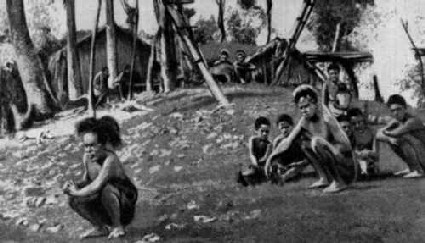
Although Sahlins‘ theory on hunters and gatherers in its form is no longer tenable, e.g. because of the reduction in adaptation to nature, the boundaries of the system and the suppression of the historic dimension as well as insufficient studies and examples, and ignoring the facts of famines among hunters and gatherers, his work influenced almost every following study within this area of economic anthropology. Woodburn for example follows his ideas dividing hunter and gatherer groups in immediate- and delayed-return societies (Woodburn, James, 1982: Egalitarian societies. In: Man Vol. 17 (The Journal of the Royal Anthropological Institute). S. 431-451.). Bird-David demands an emic perspective along the interpretive tradition and postulates the cosmic economy of sharing (Bird-David, Nurit, 1992: Beyond “The Original Affluent Societyâ€. In: Current Anthropology 33/1.).
Aside a further introduction on hunter and gatherer societies this post is actually just supposed to point out a new interview with Marshall Sahlins titled „In the Absence of the Metaphysical Field“ and the unofficial journal of the anthropology department of the University of Chicago EXCHANGE (via Savage Minds). I also found another interesting interview dating to October 2004 with Creative Commons about Prickly Paradigm Press, a pamphlet founded and re-released by Sahlins (many valuable and downloadable articles!).
More of Sahlins‘ works:
– Social Stratification in Polynesia (1957)
– Moala: Culture and Nature on a Fijian Island (1962)
– Tribesmen (1968)
– Culture and Practical Reason (1976)
– Islands of History (1992)
– Anahulu: The Anthropology of History in the Kingdom of Hawaii (1994)
– How „Natives“ Think: About Captain Cook, for Example (1995)
– Culture in Practice (2000)
More important works on hunters and gatherers:
– Burch, Ernest S. Jr. & Linda J. Ellanna (eds.), 1996: Key Issues in Hunter-Gatherer Research. Oxford: Berg.
– Lee, Richard, 1992: Art, Science or Politics. The Crisis in Hunter-Gatherer Studies. In: American Anthropologist 94/1.
– Lee, Richard & Richard Daly (Hg.), 1999: The Cambridge Encyclopedia of Hunters and Gatherers. Cambridge: Cambridge University Press.
– Lee, Richard & Irven DeVore (Hg.),1968: Man the Hunter. Chicago: Aldine.
– Myers, Fred, 1988: Critical Trends in the Study of Hunter-Gatherers. In: Annual Review of Anthropology 17. S. 261-82.
– Wilmsen, Edwin, 1989: Land Filled with Flies. A Political Economy of the Kalahari. Chicago: Chicago University Press.
About three weeks ago I became infected as well … a virus very dangerous circulating around the globe as it seems … the virus causes the so-called „panini-syndrome“, highly connected with an event that is going to start within very few hours … El Mundial, die Fußball-Weltmeisterschaft, the FIFA Soccer World Cup.
Today „High Noon“ is shifted by six hours to 6.00pm local time … Germany vs. Costa Rica … the opening match in Munich, Germany. Everyone is excited, millions of people will be standing in front of gigantic screens, sitting in pubs or at home following the broadcasting stations, or, whoever got lucky, going to the FIFA WM Stadium applauding to the first whisle of this tournament’s first referee Horacio Elizondo from Argentina.

 But … the craze commenced long before. Hundreds of thousands have been collecting and exchanging these little stickers with the portraits of their football stars. Three weeks ago, when I bought my first 20 packs containing five of them each, the vendor told me I was lucky to still be able to get some. In some regions, especially in some remoter areas, she said, they were already sold out. She herself had sold about 3.000 packs within the first week of availability. Every morning the secretaries would drop by to keep the supplies coming in for their bosses. It wouldn’t matter, kids and adults, boys and girls, roadworkes, bus drivers, clerks, lawyers, doctors … everyone affected. A newspaper article tells that since the 25th of April only within Germany there have been distributed 100.000.000 packs. I saw some of my friends in university taking a study break to update their albums, I observed a middle-age man on my way to work sitting at the little table in the train to Munich sticking with utmost care and scrupulousness his newest pictures, a friend of mine even keeps accurate accountance of his existing and missing treasures in form of tables and charts.

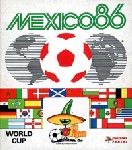

All began in 1970 with the World Cup in Mexico, when Panini, originally founded in Modena, Italy, in 1961 by Giuseppe und Benito Panini, published its first World Cup Panini Album, back then with collectable portraits of Pelé and Beckenbauer. Since then the company has supplied generations of collectors with stickers, trading cards, and comics. Taken over by Marvel Entertainment in the 90s, Panini now also produces and distributes several other well-known sticker-series and comics such as Barbie, Disney, Spiderman, Superman, X-Men, and all sorts of Mangas. Thereby Panini lanced to one of the market leaders of comic and adolescent books, stickers, e.g. the World Cup Series, still being an important segment of its corporate business.
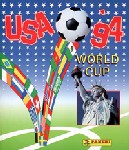
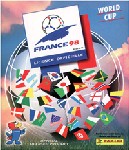

Regarding this years internationally similar Panini Album „FIFA World Cup Germany 2006“ stickers are distributed in 110 countries, 13 million packs are produced each day, 500 million are calculated to be sold worldwide till the end of the tournament. There are street markets and collectors events in Venezuela, Honduras, Puerto Rico, Brazil, Spain, Peru, France, Germany, etc. There is online exchange and market places such as eBay, Stickermanager, Kindersache Tauschbörse, Tauschbilder … where young and old have only one thing in mind … to complete the missing blanks. Some might also miss one or the other player not being represented within the album and in contrast notice some faces not in the actual pool of players now. This is due to the late nominees of all the national teams. Even more interesting that the first time in Panini History one portrait, German keeper Jens Lehmann, is produced and handed in later as an extra sticker. Just leaves everyone with the difficult question of where to put it in the album …
But, one is for sure, he will be between the goalposts of today’s opening match of 2006’s FIFA World Cup. Let the games begin! I wish everyone four exciting weeks of soccer, celebrations, and … happy collectings!
More information and press:
– Press Coverage Panini
– Google News Deutschland
 The Asociación de Antropólogos Ibero- americanos en Red – AIBR presents in its online magazine titled „Género, cuerpo y sexualidad. Cultura y ¿Naturaleza?“ (Gender, Body, and Sexuality. Culture and Nature?) various articles worth reading on the topic.
(Older editions on different topics available also, unfortunately most is in Spanish.)
Within this edition there is an interesting inter- view (also in English) with Sherry Ortner, born in 1941, one of the pioneer anthropologists in gender studies and feminist anthropology, and currently at UCLA as Professor of Anthropology teaching Critical Social Theory and Ethnographic Imagination. The interview reveals Ortner’s academic and personal life, her fieldwork experiences, the New Jersey Project and her current research on the Hollywood industry.
 As one of Geertz’s students she followed in his footsteps with articles like
Her early breakthrough might have been in 1974 with So is Female to Male as Nature is to Culture? (In: Zimbalist Rosaldo, Michelle & Louise Lamphere, (eds.): Woman, Culture, and Society). Other titles are e.g.
More information on Sherry Ortner:
„The most elegant way of travelling is, without doubt, teleportation. Science-fiction movies have made us familiar with teleportation: people enter a small cabin, dial their destination, and faster than they can say „see you later“, they disappear from the cabin and re-appear in a similar cabin at their destination. No pollution, no noisy roads, no waste of time! Unfortunately, nobody has yet invented teleportation in reality, but metros (subways) are probably the thing that comes closest…“ (by Mike Rohde)

Metros around the globe: Arts, Architecture, Metro Logos, Metro Pics, Metro Lists, Facts and Figures, Continuous Updates. I Love this site: Metro Bits.
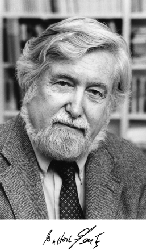 In the last session of my tutorial questions arose on what Thick Description actually is, were it comes from, how it might be best defined, how Clifford Geertz used it and what to think of „one of the most widely used texts in introductory anthropology courses“ (Kerim, Savage Minds).
And as if the world wouldn’t be small enough, by coincidence there was Saturday’s entry Anthro Classics Online: Geertz’s Notes on the Balinese Cockfight in Savage Minds. Zephyrin picked up immediately remembering HyperGeertz, an All-Inclusive- Documentation compiled by Ingo Moerth and Gerhard Froehlich. Sensational! A comprehensive, contextual and referential bibliography and mediagraphy of all works and public statements by Clifford Geertz! (Available as much as recommandable there is HyperBourdieu and HyperElias.)
Running through the site some might also discover answers to another question that came up about Geertz’s reaction on his critics within the developing Writing-Culture-Debate and within the last years, e.g. Geertz, Clifford, 2005: Shifting Aims, Moving Targets: On The Anthropology Of Religion. In: Journal of the Royal Anthropological Institute, Vol. 11 No. 1., pp. 1-15.
„We are, most all of us now, not just anthropologists, folklorists, or connoisseurs of the odd and arcane, thus somewhat employed. The jumbling of the world’s catalogue is, by now, general to the point of near universality. (…), drawn with increasing force and inevitability into the whirl of the world’s variety. It is, of course, possible that all this here-we-are-and-there-we-are will in time sort itself out and large, neat, hermetic blocs of cultural commonality, what we used to imagine ‘nations’ to be, will either re-emerge or be created anew. But, so far as I can see, there is at the moment precious little sign of it. Jumble is with us late and soon.†(p.14)
Inspired by the new entry of zephyrin_xirdal on „unrealised moscow“ pointing to „The Architecture of Moscow from the 1930s to the early 1950s. Unrealised projects“ I suddenly remembered a lecture I once attended in my subsidiary Volkskunde called „Entdeckung des Alltags im Bild“ held by Prof. Dr. Helge Gerndt.
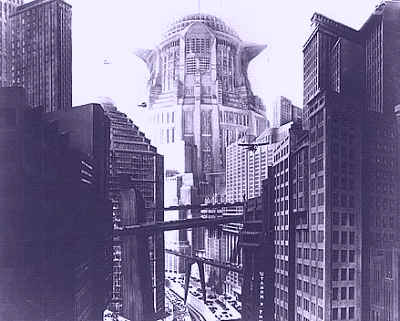
There we discussed the impact of Metropolis, one of Germany’s first science-fiction-based movies released 1927 by Fritz Lang (also known for films like Die Nibelungen, M, and Das Testament des Dr. Mabuse), how its impressions might have had an effect on peoples‘ lives and in reverse what might be concluded therefrom to understand their views on everyday routine and vision of the future. The story is based on a novel by Lang’s wife Thea von Harbou; the futuristic scenes were drawn and built especially by Erich Kettelhut… among others.
In spite of legitimate criticism, especially because of the closeness to notions of National Socialism, Metropolis launched to a milestone in expressionist cinematography and had an incredible impact on the people, even if at its times the movie only brought in a partial amount of the enormous production costs of 5 million Reichsmark, almost ruining UFA forever.
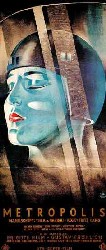

„Metropolis beeindruckte das deutsche Publikum, die Amerikaner genossen seine technische Brillanz, die Engländer dünkten sich erhaben, und die Franzosen zeigten sich von einem Film, der ihnen wie eine Mischung aus Wagner und Krupp und im ganzen als alarmierendes Zeichen deutscher Vitalität erschien, beunruhigt.“ (Kracauer, Siegfried, 1979: Von Caligari zu Hitler. Eine psychologische Geschichte des deutschen Films. In: Witte, Carsten: Siegfried Kracauer Schriften Bd. 2. Frankfurt am Main.)
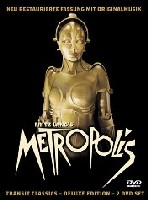 Due to many recuts and an incomplete version of the original material about 25% of the movie are lost. 2001 the preserved parts were digitally remastered by the Friedrich-Wilhelm-Murnau- Stiftung, the missing parts were replaced by interluding writings (about the process read Filminstitut – Universität der Künste Berlin), since 2003 available in a Deluxe Edition on DVD at e.g. Amazon.

I knew that living back again in the remote part of Southern Germany would have at least some advantages … ;-) ! My dear neighbour, Austria, decided long ago to broadcast all the 64 games of this years FIFA Soccer World Cup. Unlike in Munich, here I am fortunately able to receive ORF 1. Ironically the Championships take place in Germany, but for the hosts, the Germans themselves, there is only the possibility to watch 48 games in public television. Not that it wouldn’t be enough, but the rest is only available in Pay-TV. Thanx Austria … I love you!
„(…) Der ORF SPORT zeigt alle 64 Spiele der Fußball-WM 2006 vom 9. Juni bis 9. Juli in Deutschland live. Das Eröffnungsspiel findet am 9. Juni in München statt. Das Finale wird im Berliner Olympiastadion ausgetragen.
Insgesamt ca. 160 Stunden berichtet der ORF SPORT mit Live-Ãœbertragungen, WM-Studio und allen Hintergrundinfos von der Fußball-WM 2006. (…)“. Source